

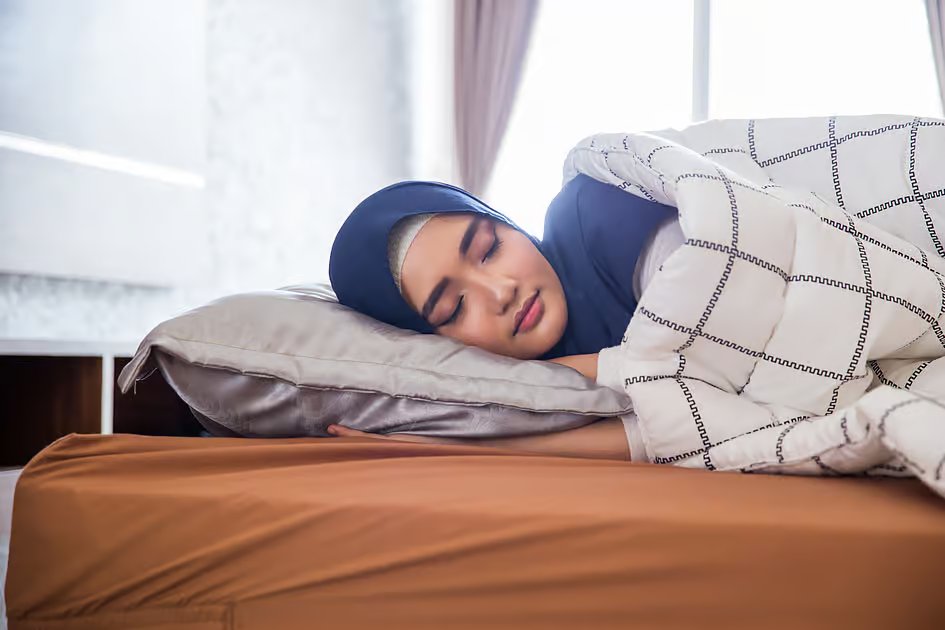
You’re tracking your sleep score, taking supplements, dimming the lights early, and still waking up tired. Welcome to sleepmaxxing.
The trend, which has been gaining traction online, encourages people to optimise every part of their sleep, from strict routines and blackout environments to wearable trackers and recovery scores. But while it promises better rest, experts say it may be doing the opposite for some.
When sleep becomes another task
According to Dr Rita Figueiredo, licensed psychologist and managing director at Peninsula Psychology, sleep is often the first place where stress begins to show, even in people who appear to be coping.
“People are still working, meeting responsibilities, and staying productive, but the body often tells a different story, and sleep tends to reflect that,” she said.
Rather than presenting as burnout, many individuals report difficulty switching off, waking during the night, or feeling tired despite getting enough hours in bed. In many cases, this reflects ongoing pressure rather than an isolated sleep issue.
“Many clients come in with detailed data from devices like wearables, smartwatches, or rings. While this can be useful to notice general patterns, it can also become another source of pressure. People begin to monitor their sleep closely, compare scores, and try to optimise every night,” she said.
This sits within what is often referred to as “sleepmaxxing”, a trend that promotes optimising sleep through routines, environmental adjustments, supplements, and tracking.
“There is a concept in sleep medicine called orthosomnia, which describes a strong focus on achieving ‘perfect’ sleep through tracking. For some individuals, particularly those who are already high-achieving or prone to perfectionism, this can increase anxiety around sleep and actually worsen it,” she said.
“When sleep becomes another task to perform well, it tends to create more vigilance and tension, which interferes with rest.”
What experts say
Jamie Richards, chief wellbeing officer at Valeo Health and clinical psychoneuroimmunologist, said the effectiveness of sleep optimisation tools vary from person to person.
“There is no one-size-fits-all approach. Some supplements, such as zinc, magnesium or B6, may be effective if there is a deficiency, which is why some people notice an initial benefit that may not last over time.”
He noted that some herbal remedies, such as saffron, may have a calming effect and support sleep, but emphasised that routines remain key.
“The overall consensus is that establishing a routine that prepares the body for sleep is highly effective, as it helps regulate the circadian rhythm.”
Richards also warned that over-optimising sleep can become counterproductive.
“There is a risk of becoming overly focused on sleep, where individuals may struggle when they do not meet their own expectations or the expectations set by tracking devices.”
He added that this can lead to increased pressure around sleep.
“When people focus too much on achieving ‘perfect’ sleep metrics, it can create anxiety and negatively impact sleep quality, especially when normal variations are interpreted as problems.”
On improving sleep, he pointed to simple, evidence-based habits.
“Exposure to sunlight early in the day, limiting screen use before bed, maintaining a calm routine, and keeping the sleep environment dark and cool can all support better sleep.”
He added that emotional factors also play a role.
“It is often not the event itself that disrupts sleep, but the emotion attached to it. Managing stress and creating a predictable, calm environment can make a significant difference over time.”
What actually helps
From a medical perspective, simpler approaches tend to be more effective.
Dr Ahmed Mustafa, medical officer, said that while sleep tools and supplements can be useful, they are often overused without proper understanding.
“Simple habits tend to have the biggest impact. Keeping a consistent sleep and wake time, reducing screen exposure before bed, and getting natural light during the day can help regulate the body’s internal clock more effectively than relying on multiple tools or supplements.”
He added that creating a wind-down routine, even something as simple as lowering lights or avoiding late meals, can signal to the body that it is time to rest.
Consistent routines and addressing underlying stress remain the most effective ways to improve sleep quality.
When optimisation goes too far
Part of the concern around sleepmaxxing is how quickly it can become rigid.
Some practices circulating online — from heavy supplement use to extreme routines — can create unrealistic expectations and, in some cases, safety concerns.
In many cases, what actually helps is the opposite: simpler routines, consistent wake times, and addressing the underlying stress that is driving the sleep disruption.
Source: Khaleej Times