

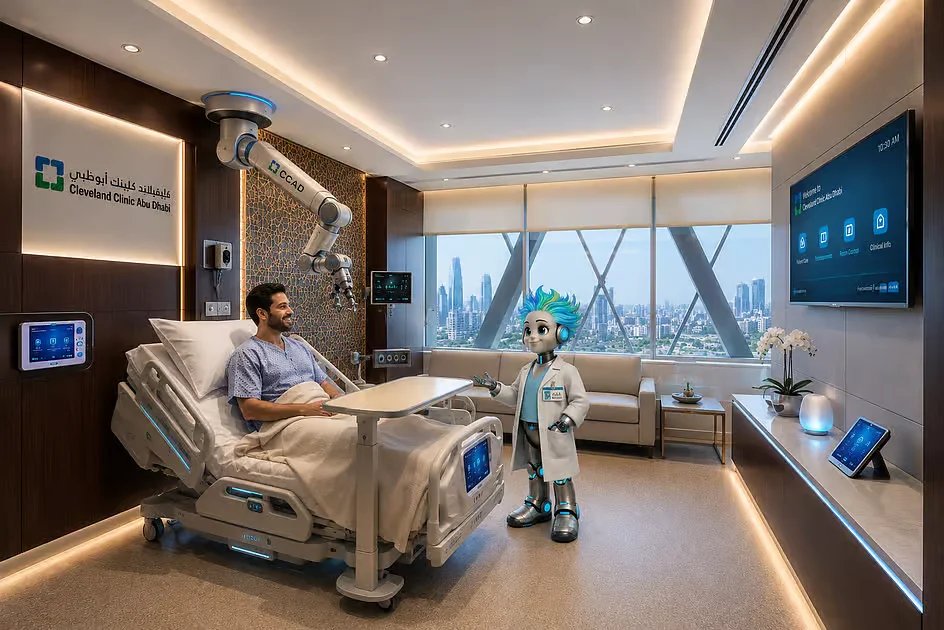
The world’s first artificial intelligence scientist which will help clinical decision making faster and easier using patient data in real time has been unveiled in the UAE.
‘Aila’ is designed to reason across complex datasets, generate actionable medical insights, and continuously learn. It is expected to change how clinicians interact with data, enabling them to make faster, more informed, and more precise decisions.
The project is collaboration between Cleveland Clinic Abu Dhabi and AI biotech company Owkin. “By responsibly harnessing advanced artificial intelligence built on real patient data, we are empowering our caregivers with powerful tools that enhance clinical judgment, advance discovery, and ultimately improve outcomes for the patients and communities we serve,” said Dr. Georges‑Pascal Haber, Chief Executive Officer of Cleveland Clinic Abu Dhabi.
Stay up to date with the latest news. Follow KT on WhatsApp channels.
Aila is designed to function as a clinical AI scientist, unlocking and connecting datasets. Through a secure interface, physicians will be able to sift through vast amounts of clinical data in real time and receive insights that previously required days or weeks of manual analysis. The platform is expected to transform fragmented information into a unified information platform that physicians can rely on to get meaningful insights at a critical moment when clinical decisions have to be made.
Initial phase
The initial deployment of Aila will focus on prostate cancer, integrating multiple clinical data sources including electronic health records, physician notes, pathology reports, and medical imaging. The agent, which is built on Owkin’s agentic K Pro and is supported by the UAE’s AI enabled infrastructure, is engineered to scale across additional medical specialties and increasingly complex data modalities.
Over time, the platform is designed to incorporate advanced data types such as multi‑omics and genomic data, supporting large‑scale precision medicine initiatives.
Aila is expected to help doctors and researchers look back at patient data to spot hard-to-see patterns. This will create a cycle where patient care and research constantly learn from each other. As a result, it makes precision medicine more practical, speeds up research, and helps hospitals track and improve their performance over time.
“The deployment of this first‑of‑its‑kind clinical AI scientist underscores the UAE’s leadership in advancing healthcare innovation,” Dr. Haber added. “Forward‑looking national investments and policies have created an environment where transformative technologies can be safely and responsibly implemented in real clinical settings, setting new benchmarks for healthcare systems regionally and globally.”
Source: Khaleej Times