

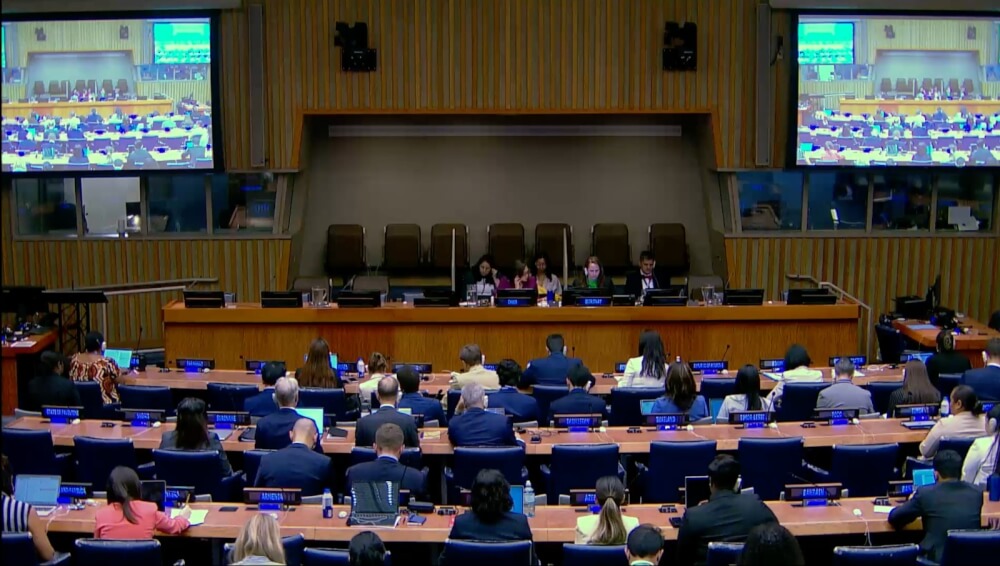
Forming part of broader capacity-building efforts, the program will equip delegates with the knowledge and skills to meaningfully engage in UN discussions on ICT in the context of international security
New York – The UN Office for Disarmament Affairs (UNODA) and the Global Cybersecurity Forum (GCF) announced their partnership to implement the United Nations (UN) Global Mechanism on ICT Security Delegate Training Program – a multistakeholder initiative that will equip official delegates with the knowledge and practical skills needed to participate effectively in UN discussions on ICT in the context of international security, at a time where threats to global ICT infrastructure are rapidly evolving.
The Program will prepare nominated delegates for participation in the UN Global Mechanism through targeted capacity-building across the international ICT security agenda. It will cover key areas including the evolving ICT threat landscape, cyber capacity maturity assessments, AI cybersecurity readiness, international law in the ICT domain, national cybersecurity strategy development, cyber economics, and practical simulation exercises on incident response and UN norms of responsible State behavior.
H.E. Izumi Nakamitsu, UN Under-Secretary-General and High Representative for Disarmament Affairs (UNODA), said: “ICT security challenges are often borderless and ultimately impact all States. To ensure United Nations outcomes are sustainable and effective, processes must be inclusive, accessible and collaborative. In line with this, the sponsorship and training programme will be open to participation of all States, ensuring representation and diversity in the 2026 sessions of the Global Mechanism.”
The launch of the Program coincides with the first substantive plenary meeting of the Global Mechanism, held from 20 to 24 July 2026 at UN Headquarters in New York and marked by statements from H.E. Amb. Egriselda Aracely González López, Permanent Representative of El Salvador to the United Nations and Chair of the Global Mechanism (2026-27); Eng. Abdurahman AlHassan, CEO of GCF; and Dr Beyza Unal, Head of the Science, Technology, and International Security Unit at UNODA.
Abdurahman AlHassan, CEO of GCF, said: “Cyberspace is complex and constantly evolving. Through this Program, we aim to facilitate broader discussions on global cybersecurity and continue to recognize a shared responsibility for building a safer, more resilient Cyberspace for all nations and societies.”
The Program forms part of the Global Initiative for Capacity Building in Cyberspace, announced at the GCF Annual Meeting 2025 as a collaboration between the Kingdom of Saudi Arabia and the UN. Implementation of the initiative is led by the National Cybersecurity Authority (NCA) of the Kingdom of Saudi Arabia, in collaboration with the Saudi Information Technology Company (SITE), and GCF, in partnership with UN agencies, including UNODA, and a wide network of international partners. Leveraging the diverse expertise of these entities, it addresses critical gaps in global cybersecurity capacity to help safeguard societies, economies, and critical infrastructure against growing cyber threats.
The Delegate Training Program underscores the shared importance of strengthening international collaboration on ICT security and supporting more effective multilateral engagement in the work of the Global Mechanism.
Source: Tahawul Tech