
Close Menu

    Subscribe to Updates

    Get the latest creative news from FooBar about art, design and business.

    What's Hot

    Arab, Islamic FMs slam Israeli strike on Gaza’s Nasser Medical Complex, demand unhindered aid delivery

    November 14, 2026

    Saudi Ambassador Presents Credentials to Colombian Foreign Minister on Behalf of President

    November 14, 2026

    Elon Musk leads 21,000 signatories demanding return of Jensen to Nvidia

    November 14, 2026
    Facebook X (Twitter) Instagram
    Riyadh Week
    • Home
    • KSA
    • Business
    • Technology
    • Sports
    • Lifestyle
    Facebook X (Twitter) Instagram YouTube
    Riyadh Week
    Home»KSA»Sidr Fruit Ripens Across Valleys and Plains of Northern Borders Region
    KSA

    Sidr Fruit Ripens Across Valleys and Plains of Northern Borders Region

    Editorial TeamBy Editorial TeamNovember 14, 2026
    Share Facebook Twitter Pinterest Copy Link LinkedIn Tumblr Email
    Share
    Facebook Twitter LinkedIn Pinterest Email Copy Link

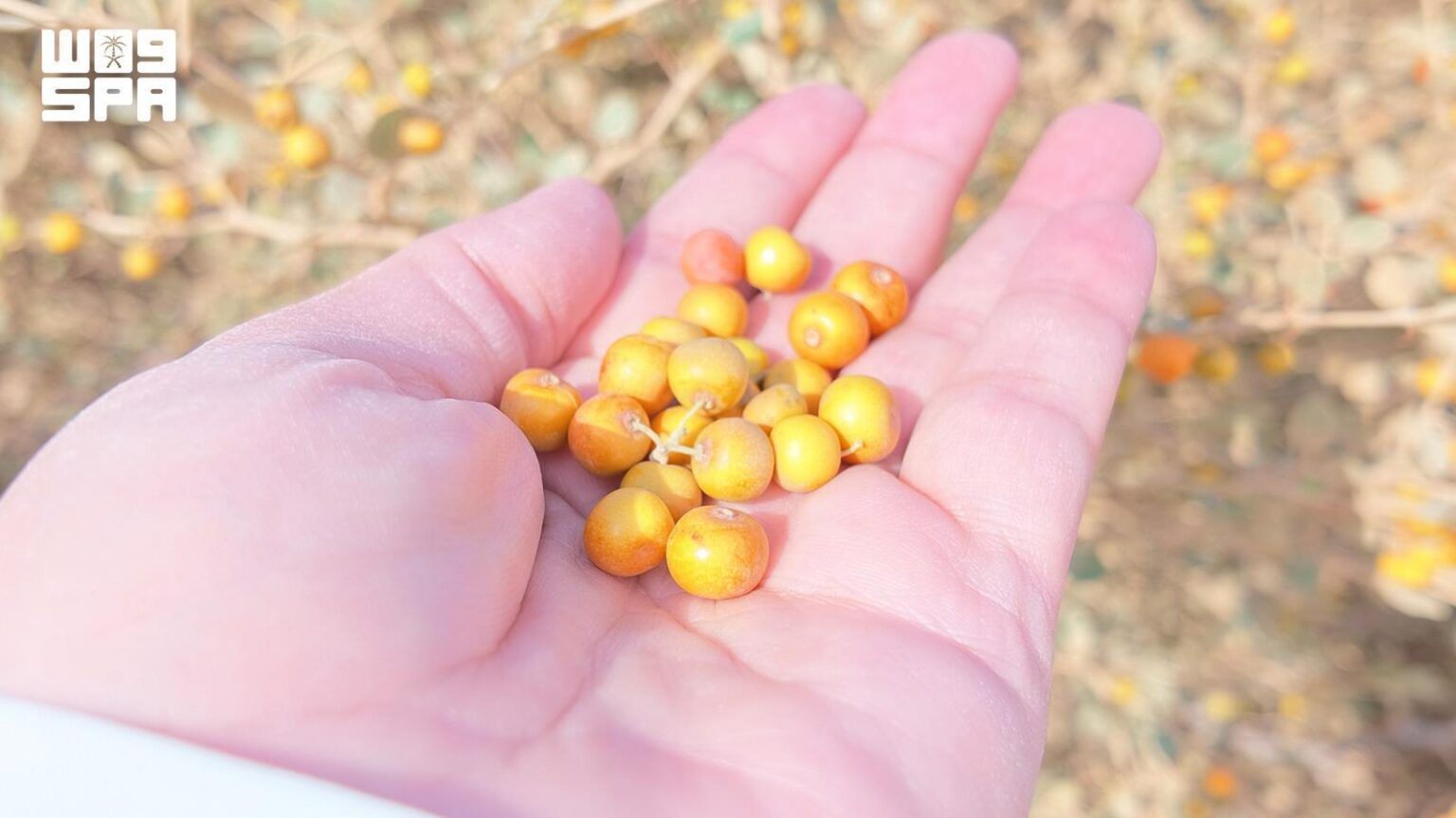
    Fruit is hanging from the branches of wild sidr (Christ’s thorn jujube) trees across the valleys and plains of Northern Borders Region, a seasonal sight that highlights a tree deeply rooted in the region’s environment and natural heritage. The fruit, known locally as nabq (jujube), is prized for its sweet taste and nutritional value.

     The sidr tree belongs to the genus Ziziphus, and a common species in the Arab region is Ziziphus spina-christi. A drought-resistant perennial, it thrives in dry, sunny environments. Its edible fruit changes from green to yellow and turns brown when fully ripe, and varies in shape and size, with thin skin and sweet flesh. In the region, the trees flower in October, and the fruit develops and ripens through the season.

     Studies show that the fruit contains carbohydrates, vitamins A, B, and C, and minerals such as potassium, calcium, phosphorus, and iron, although its exact composition varies with the species, ripeness, and growing conditions.

     The sidr holds an important ecological and cultural place in the Arab region, and its ability to withstand drought and water scarcity has made it a prominent wild tree in desert and semi-desert landscapes. Its fruiting season reflects the beauty and diversity of the region’s plant life and the tree’s long connection with its people and environment.

    Source: Riyadh Daily

    Related Posts

    Saudi Ambassador Presents Credentials to Colombian Foreign Minister on Behalf of President

    November 14, 2026

    Islamic Affairs Ministry Concludes Training Course in North Macedonia with Over 150 Participants

    November 14, 2026

    Saudi Women in Artificial Intelligence: From National Empowerment to Global Competitiveness

    November 14, 2026
    Top Posts

    QBS Software Middle East embeds AI into core operations

    April 1, 2026

    Bosnia’s Barbarez cool as ice after reaching World Cup in shootout with Italy

    April 1, 2026

    Kuwaiti tanker hit by Iranian drone attack in Dubai waters

    April 1, 2026

    UAE designers turn jewellery into meaningful Eid gifts

    April 1, 2026
    Don't Miss

    Arab, Islamic FMs slam Israeli strike on Gaza’s Nasser Medical Complex, demand unhindered aid delivery

    By Editorial TeamNovember 14, 2026

    RIYADH — The foreign ministers of Saudi Arabia and several other Arab and Islamic countries…

    Saudi Ambassador Presents Credentials to Colombian Foreign Minister on Behalf of President

    November 14, 2026

    Elon Musk leads 21,000 signatories demanding return of Jensen to Nvidia

    November 14, 2026

    UAE doctors say ‘glass skin’ craze risks long-term skin damage for kids, teens

    November 14, 2026
    • KSA
    • Business
    • Technology
    • Lifestyle
    • Sports
    • Contact us
    2026. All rights reserved.

    Type above and press Enter to search. Press Esc to cancel.