

We often speak about the “skill gap” as though it were a distant, abstract challenge. In reality, it shows up in very practical ways across organisations. A graduate enters the workforce and needs time to become fully effective. Employers, in turn, spend months training new hires on tools and systems they had expected them to already know. What exists in between is not a gap of capability, but more often a gap of alignment.
At its core, the skill gap reflects the difference between academic preparation and industry expectations. In the technology sector, this gap has become more visible in recent years.
According to the World Economic Forum, nearly 44% of workers’ core skills are expected to change by 2027, driven by advances in AI, automation, and digital transformation. The pace of change is such that roles evolve faster than most traditional systems can respond to. It is not that universities are falling behind; rather, the benchmarks themselves continue to shift.
This is why the conversation today is less about fixing education and more about reshaping it so that it stays connected to industry realities.
One of the more encouraging developments has been the shift toward experiential learning. Students today are increasingly building prototypes, working on live industry problems, and collaborating in ways that resemble real workplaces. Research suggests that applied learning plays a significant role in improving job readiness and reducing onboarding time. Just as importantly, these experiences build confidence, including the ability to deal with uncertainty, which is often where meaningful work happens in technology environments.
At the same time, the relationship between universities and industry is becoming more continuous. In many cases, it is no longer limited to placements or recruitment cycles. Industry inputs are shaping curricula, professionals are contributing to teaching, and students are gaining earlier exposure to how organisations function. For employers, this can make a noticeable difference, as graduates arrive with a clearer sense of expectations and working environments.
At BITS Pilani Dubai Campus, this approach is reflected through a set of structured initiatives. The Practice School programme, for instance, places students within industry environments where they work on real assignments rather than simulations. This is supported by active engagement with Industry Advisory Panels, which provide regular input into curriculum design and programme alignment. Open electives further allow students to move beyond their core disciplines and explore a broader academic base. The intention is fairly straightforward, to ensure that learning connects with application, and that students are better prepared to navigate problems that do not come with ready answers.
There is also a growing recognition that technical knowledge, by itself, is not enough. Insights from the LinkedIn Workplace Learning Report consistently show that skills such as communication, critical thinking, and collaboration remain in high demand. These are often the skills that determine how effectively technical expertise is applied within organisations. Universities are therefore placing greater emphasis on these aspects, even within highly technical programmes.
Another shift, which is becoming increasingly important, is the idea that learning does not end with graduation. In many ways, that is just the starting point. A report by the Organisation for Economic Co-operation and Development highlights the growing importance of lifelong learning in maintaining workforce relevance. Universities are gradually expanding their role here as well, through executive education, certifications, and other flexible learning formats that support professionals over time.
Bridging the skill gap is not something universities can do alone. It requires a shared effort, with industry engaging as partners, students staying curious, and institutions remaining adaptable. This shift is already underway, even if not always visible. Ultimately, if education is seen as preparation for a continuously changing world, the focus moves from catching up to staying aligned.
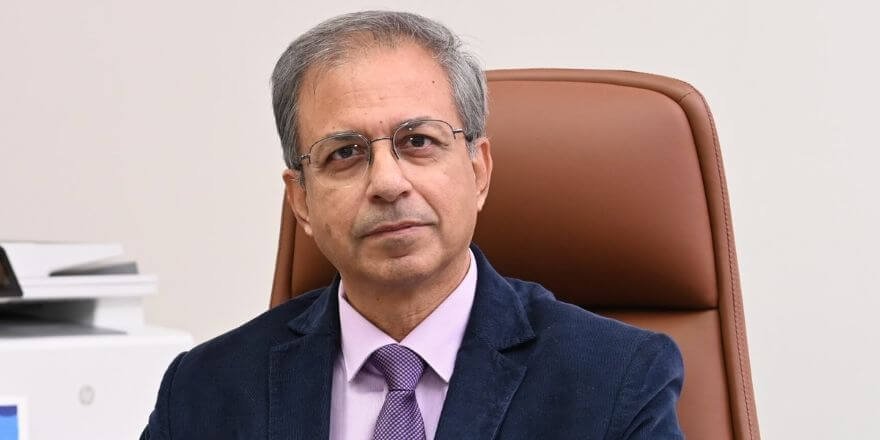
This opinion piece is authored by Professor Souri Banerjee, Director BITS Pilani Dubai Campus.
Source: Tahawul Tech