

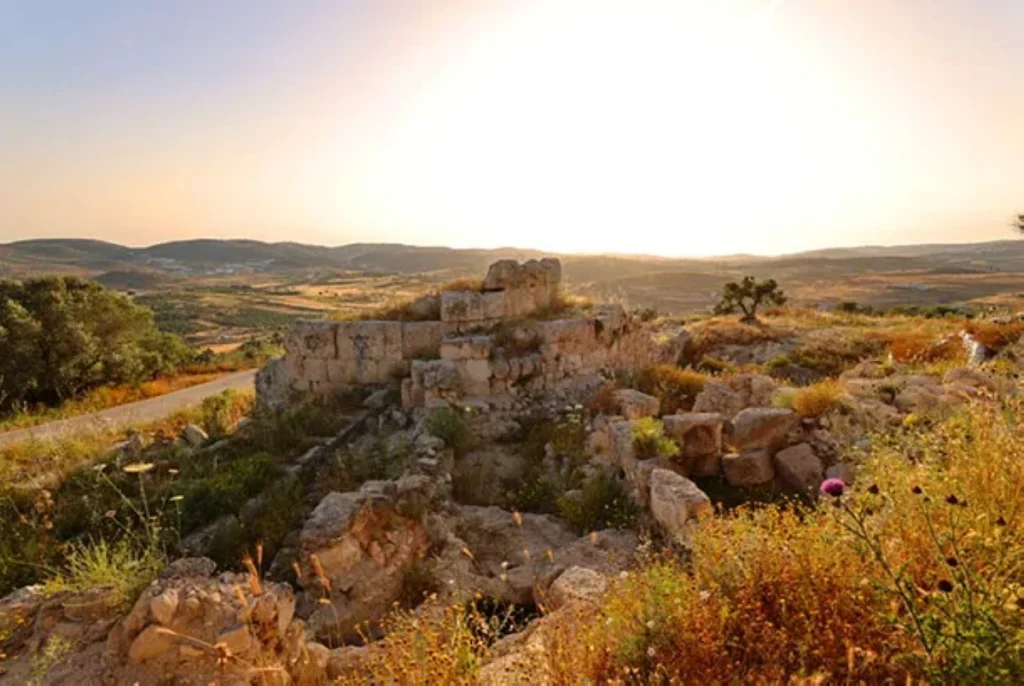
BUSAN, South Korea — UNESCO on Friday added the archaeological site of Sebastia in the occupied West Bank and five historic castles in southern Lebanon to its World Heritage List, despite objections from Israel, which had urged the U.N. cultural agency to reject the nominations.
Meeting in the South Korean city of Busan, UNESCO’s World Heritage Committee also placed both sites on the List of World Heritage in Danger after considering the nominations under an emergency procedure because of ongoing conflicts in the Middle East.
Earlier this week, Israel’s Foreign Ministry called on the committee to reject the nominations, accusing the Palestinian delegation of “weaponizing cultural heritage” and arguing that the designations were politically motivated.
Sebastia, located about 10 kilometers northwest of Nablus in the Israeli-occupied West Bank, is widely identified by scholars as ancient Samaria, the capital of the biblical Kingdom of Israel. The site contains archaeological remains dating from the Iron Age through the Roman, Byzantine and Islamic periods. Christian and Islamic traditions also associate the site with the burial of John the Baptist.
The Palestinian delegation first submitted Sebastia’s nomination to UNESCO in 2012, arguing that World Heritage status was needed to help preserve the site, which it said remains underdeveloped and requires additional conservation despite attracting visitors.
The designation comes as Israel moves to expropriate land around the site while facing international pressure to curb violence by Israeli settlers in the occupied West Bank.
The committee also inscribed five castles in Lebanon’s Mount Amel region, recognizing their architectural significance and the combination of Crusader, Ayyubid, Mamluk and local influences that reflect nearly nine centuries of fortified architecture. The sites include Beaufort Castle, also known as Al-Shaqif, which Israeli forces seized during military operations in southern Lebanon in May.
Adel Naim Daoud Atieh, a member of the Palestinian delegation to UNESCO, said the designation recognized the efforts of Sebastia’s residents to preserve the site despite what he described as occupation and restrictions.
Israel, which withdrew from UNESCO in 2019 after accusing the organization of bias, criticized Friday’s decision. A member of the Israeli delegation attending the Busan meeting as an observer said political considerations had undermined the organization’s credibility.
In a statement issued earlier this week, Israel’s Foreign Ministry argued that the Palestinian nomination sought to erase the site’s Jewish and Christian historical connections. It also objected to the inclusion of Beaufort Castle, alleging that Hezbollah had used the site for military purposes by constructing tunnels and launching rockets from the area.
A Lebanese delegate rejected Israel’s allegations during Friday’s meeting, saying the castles have been used solely for cultural and tourism purposes since Israel withdrew from southern Lebanon in 2000.
On Wednesday, UNESCO also placed the ancient Phoenician city of Tyre in southern Lebanon on its List of World Heritage in Danger after the city sustained damage during recent fighting between Israel and Hezbollah.
Source: Saudi Gazette