
Close Menu

    Subscribe to Updates

    Get the latest creative news from FooBar about art, design and business.

    What's Hot

    Iraq dismisses Maysan police chief, closes border crossings after Saudi pipeline attacks

    September 12, 2026

    UK-based Indian nurse wins $250,000 Aster Guardians Global Nursing Award

    September 12, 2026

    UK reaffirms solidarity with Saudi Arabia during call between foreign ministers

    September 12, 2026
    Facebook X (Twitter) Instagram
    Riyadh Week
    • Home
    • KSA
    • Business
    • Technology
    • Sports
    • Lifestyle
    Facebook X (Twitter) Instagram YouTube
    Riyadh Week
    Home»KSA»Why Does the Historic Haddaj Well Symbolize Generosity in the Arabian Peninsula?
    KSA

    Why Does the Historic Haddaj Well Symbolize Generosity in the Arabian Peninsula?

    Editorial TeamBy Editorial TeamJuly 11, 2026
    Share Facebook Twitter Pinterest Copy Link LinkedIn Tumblr Email
    Share
    Facebook Twitter LinkedIn Pinterest Email Copy Link

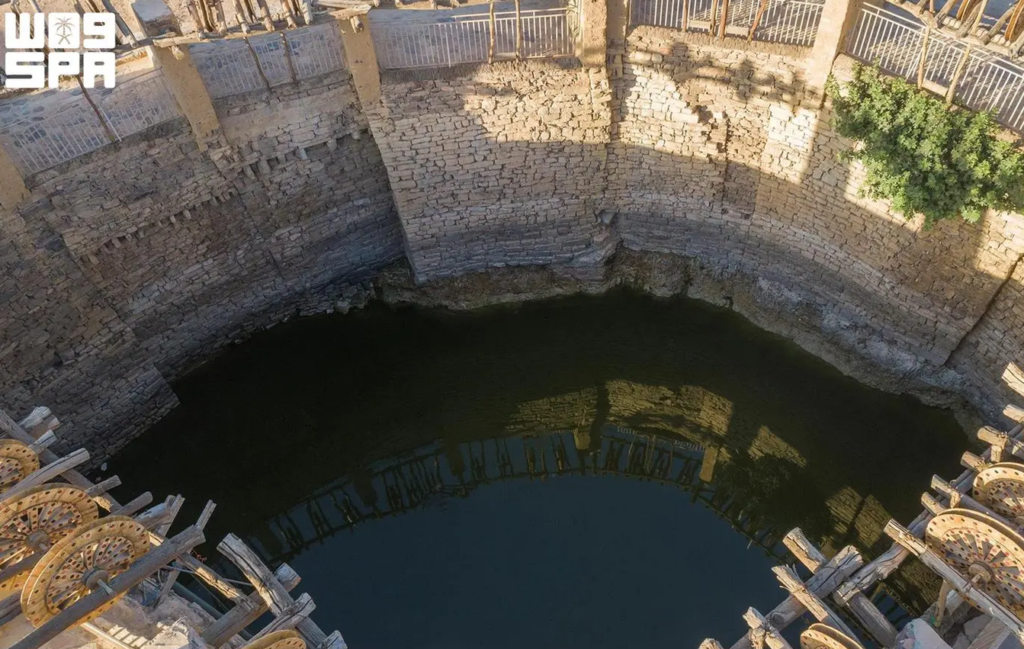
    The Haddaj Well, situated in the heart of Tayma within Tabuk Region, stands as one of the oldest and most significant historical wells in the Arabian Peninsula.

     According to the Encyclopedia of the Kingdom of Saudi Arabia published by the King Abdulaziz Public Library, this architectural marvel is believed to date back to the 6th century BC. Long celebrated for its exceptionally abundant water supply, the well has evolved into an enduring symbol of hospitality and generosity in local memory.

     Constructed of meticulously polished stone and flanked on all sides by lush palm trees, the massive well measures 65 meters in circumference with a depth ranging between 11 and 12 meters. In its historical peak, water was channeled from the depths through 31 stone pipes, providing enough capacity to irrigate up to 100 camels simultaneously during the harsh summer months.

     The ancient well continued to serve residents, nearby farms, and nomadic Bedouin tribes using traditional wooden waterwheels until 1373 AH (1954). Following a comprehensive restoration project in 1433 AH (2012), the site was transformed into a prominent archaeological and tourist landmark.

     Today, its historic waters continue to flow, bridging the region’s deep past with its present.

    Source: Riyadh Daily

    Related Posts

    Health Holding to Launch Two Emergency Leadership Programs in AlUla

    September 12, 2026

    Habuna Heritage Villages in Najran Stand as Testaments to Architectural Ingenuity

    September 12, 2026

    Saudi Media Academy Concludes Second Edition of Media Leaders Track in France

    September 12, 2026
    Top Posts

    QBS Software Middle East embeds AI into core operations

    April 1, 2026

    Bosnia’s Barbarez cool as ice after reaching World Cup in shootout with Italy

    April 1, 2026

    Kuwaiti tanker hit by Iranian drone attack in Dubai waters

    April 1, 2026

    UAE designers turn jewellery into meaningful Eid gifts

    April 1, 2026
    Don't Miss

    Iraq dismisses Maysan police chief, closes border crossings after Saudi pipeline attacks

    By Editorial TeamSeptember 12, 2026

    BAGHDAD — Iraqi Prime Minister Ali Al-Zaidi dismissed the police chief of Maysan province and…

    UK-based Indian nurse wins $250,000 Aster Guardians Global Nursing Award

    September 12, 2026

    UK reaffirms solidarity with Saudi Arabia during call between foreign ministers

    September 12, 2026

    Health Holding to Launch Two Emergency Leadership Programs in AlUla

    September 12, 2026
    • KSA
    • Business
    • Technology
    • Lifestyle
    • Sports
    • Contact us
    2026. All rights reserved.

    Type above and press Enter to search. Press Esc to cancel.