

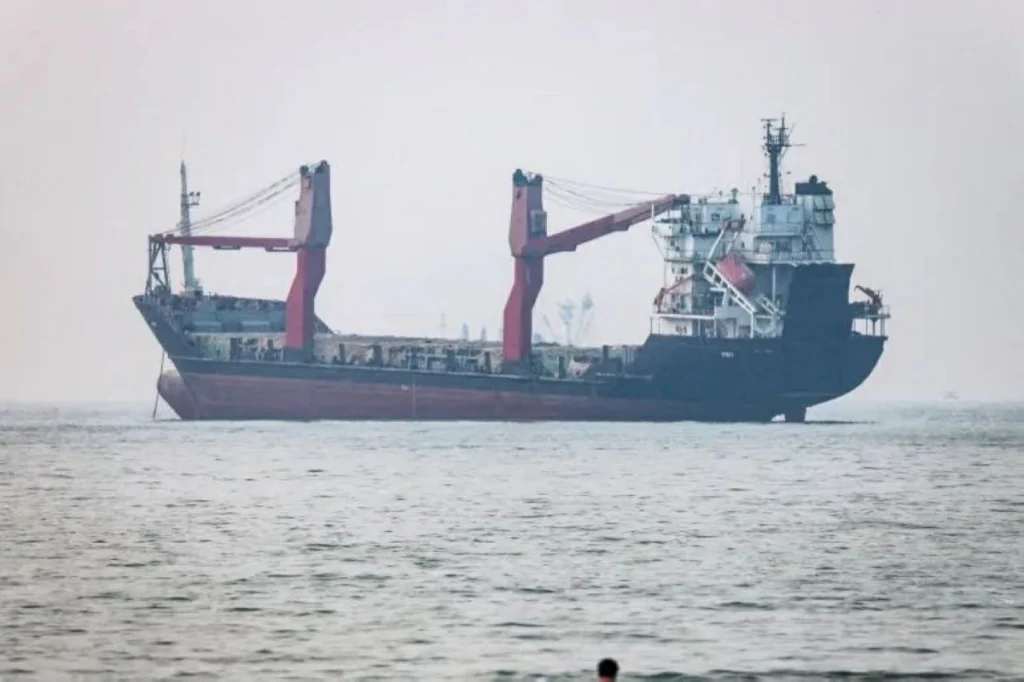
DUBAI — Traffic through the Strait of Hormuz began to rebound following weekend tit-for-tat strikes between the US and Iran while an industry representative said the gradual increase in transit resulted in a noticeable easing of shipping costs.
Reports from the maritime tracking firm Kpler said 40 vessels passed through the critical waterway on Monday, while 24 ships transited the strait on Sunday in addition to 39 ships on Saturday.
Energy markets have responded in tandem with stabilized prices.
Closure of the strait, a key waterway transporting roughly a fifth of the global oil supply, has been a major hiccup during the more than four-month-long conflict in the Middle East.
Iran’s threats to down commercial vessels transiting the channel, the regime’s implementation of pricy tolls to ensure safe travel and the now-lifted US naval blockade added to the struggle.
Despite the latest round of strikes — launched after Iran struck a Qatar-operated crude oil tanker on Saturday, a Singapore-flagged cargo vessel last week and targeted US bases in Gulf states on Sunday — both countries agreed to “stand down” for the time being and allow safe passage through the Strait of Hormuz.
Prior to the war, some 130 commercial vessels transited the Strait of Hormuz. Traffic came to a standstill after Feb. 28, when the US and Israel launched joint pre-emptive strikes on Iran, and Tehran retaliated in subsequent attacks.
Traffic through the strait still remains 70% below pre-war levels following a noticeable uptick after the deal came into force.
Bilgehan Engin, president of the Turkish Forwarding and Logistics Association (UTIKAD), told the Anadolu news agency that the easing of Middle East tensions with the signing of a memorandum between the US and Iran on June 14, which entered into force four days later, led to a gradual normalization of transit through the Strait of Hormuz.
The agreement called into question the conditions under which the vital waterway could be reopened to commercial shipping.
Shipments through the Strait of Hormuz picked up pace after the agreement as the tensions paralyzing the logistics sector since the end of February eased, while uncertainty in global supply chains and high risk premiums are expected to decline.
Engin stated that surging freight rates, insurance costs, and risk premiums influenced the global maritime transport market throughout the year, as spot freight rates, especially for tankers and containers, reached historic highs.
“While insurance costs are falling, freight rates aren’t declining at the same pace due to the persistence of structural cost factors,” he said, noting that the risk premium has not completely disappeared at key transit points but has instead been repriced within a lower range, fueling expectations that the bottom level in the spot market will be significantly above pre-crisis levels.
“Shipowners and major logistics firms are revising high-priced long-term contracts signed during the crisis through index-linked and flexible structures open to renegotiation,” he said. “In fixed-price contracts, sudden changes are limited due to the legal framework, but new-term contracts are shifting to a lower risk premium and a more balanced pricing structure.”
He noted that the sector is adopting a more cautious stance in the medium term despite short-term spot declines to take into account persistent risk premiums.
Engin stated that the rerouting around the Cape of Good Hope during the crisis artificially increased ton-mile demand in global maritime transport, leading to a temporary capacity crunch.
“The reversal of the rerouting will not lead to a severe supply shock on its own but instead to a gradual easing in the spot market and a more competitive pricing environment with narrowing margins. In the long term, the market will look for a new balance, establishing a new price floor dependent on demand growth and fleet discipline,” he said.
He noted that heightened risks around the Strait of Hormuz during the war pressured port operations along the Arabian Gulf and Red Sea routes, and while some ports partially lost their function as transit hubs, transshipments via alternative routes increased costs and transit times.
“These ports, through the normalization process, are expected to reintegrate into mainstream trade routes. Gulf ports especially will enter a phase of rapid recovery in energy exports and Asia-bound container flows, but the persistence of security concerns in the Red Sea may lead to a more gradual recovery,” he said.
“Meanwhile, near-shoring and multimodal corridors evolved from temporary solutions into strategic diversification tools, as major firms moved towards hybrid models with rail, short-sea shipping, and regional distribution centers on the Asia-Europe route as a permanent feature.”
He added that the return to stability in the Strait of Hormuz may make traditional maritime routes appealing once again, but it will not eradicate alternative corridors, as global supply chain management relies on cost optimization, risk diversification, and supply security in the aftermath of the crisis.
Source: Saudi Gazette