

If you’ve been scrolling Instagram over the past few days, you may have noticed something unusual.
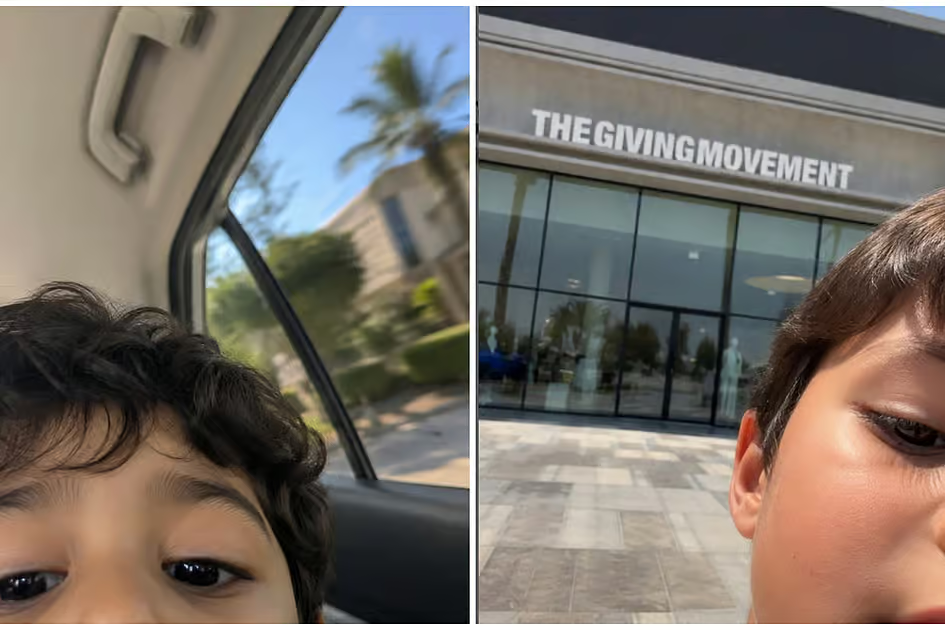
Major brands across the GCC have seemingly handed over their social media accounts to children. Crooked selfies, fingers covering the camera, blurry snapshots and random close-ups have appeared on the feeds of companies including Uber UAE, Visit Abu Dhabi and du, leaving many users wondering the same thing: What is going on?
The answer lies in what appears to have started as a genuine social media mishap.
How it started
According to the brands participating in the trend, it all began after Saudi abaya brand Sahaba Abaya uploaded a photo taken by the owner’s child. The image, paired with a nonsensical caption, looked exactly like what would happen if a young child got hold of a phone and unknowingly posted to Instagram.
Rather than deleting the post and moving on, the brand left it up, and users loved it.
The comments quickly turned into part of the joke. Some users wrote, “Give mama the phone back,” while others joked, “Tell mama to give us a discount,” treating the post as though they were speaking directly to the child behind the account.
Stay up to date with the latest news. Follow KT on WhatsApp channels.
Soon afterwards, other Saudi brands began recreating the format intentionally, posting their own child-style photos. The trend quickly spread across the GCC, with each brand adding its own twist.
Before long, companies including Uber UAE, Visit Abu Dhabi, du, the UAE’s Ministry of Energy and Infrastructure, and several creative agencies had adopted the trend, transforming what appeared to be an innocent mistake into one of the region’s latest viral marketing moments.
Why is it working?
The appeal lies in its authenticity.
For years, brands invested heavily in polished photography, carefully curated Instagram feeds and highly produced campaigns. Today, however, audiences, especially Gen Z, are more likely to engage with content that feels spontaneous, imperfect and native to social media.
Many brands have also used the trend to communicate marketing messages or promote campaigns through the “voice” of the child.
Instead of polished advertising copy, the posts often feature playful captions, simple observations or humorous messages that appear as though they were written by a young child, making promotional content feel less like an advertisement and more like entertainment.
Not all of the children featured in these posts are real. Many brands have used AI-generated images to recreate the aesthetic, while others have shared actual photos, adding another layer to a trend that blends artificial intelligence, storytelling and social media humour.
The childlike photos capture that feeling perfectly. They look accidental, playful and human, making them stand out in feeds crowded with professional advertising.
In many cases, the images are accompanied by deliberately random captions, reinforcing the illusion that a child really did post them.
Whether the trend lasts another week or another month, it highlights how quickly social media culture can evolve.
Source: Khaleej Times